
Skip to content

Hedges & Shrubs

We cut hedges for homeowners, landlords, and businesses across Darlington and the North East, from a small front garden hedge to large commercial and boundary hedging that needs a proper team to handle it.

A hedge left to its own devices doesn't stay neat for long. It thickens out, loses its shape, starts blocking a path or a window, and within a couple of seasons what was a tidy boundary becomes a job that takes a lot longer to bring back under control than it would have if it had been kept on top of from the start.

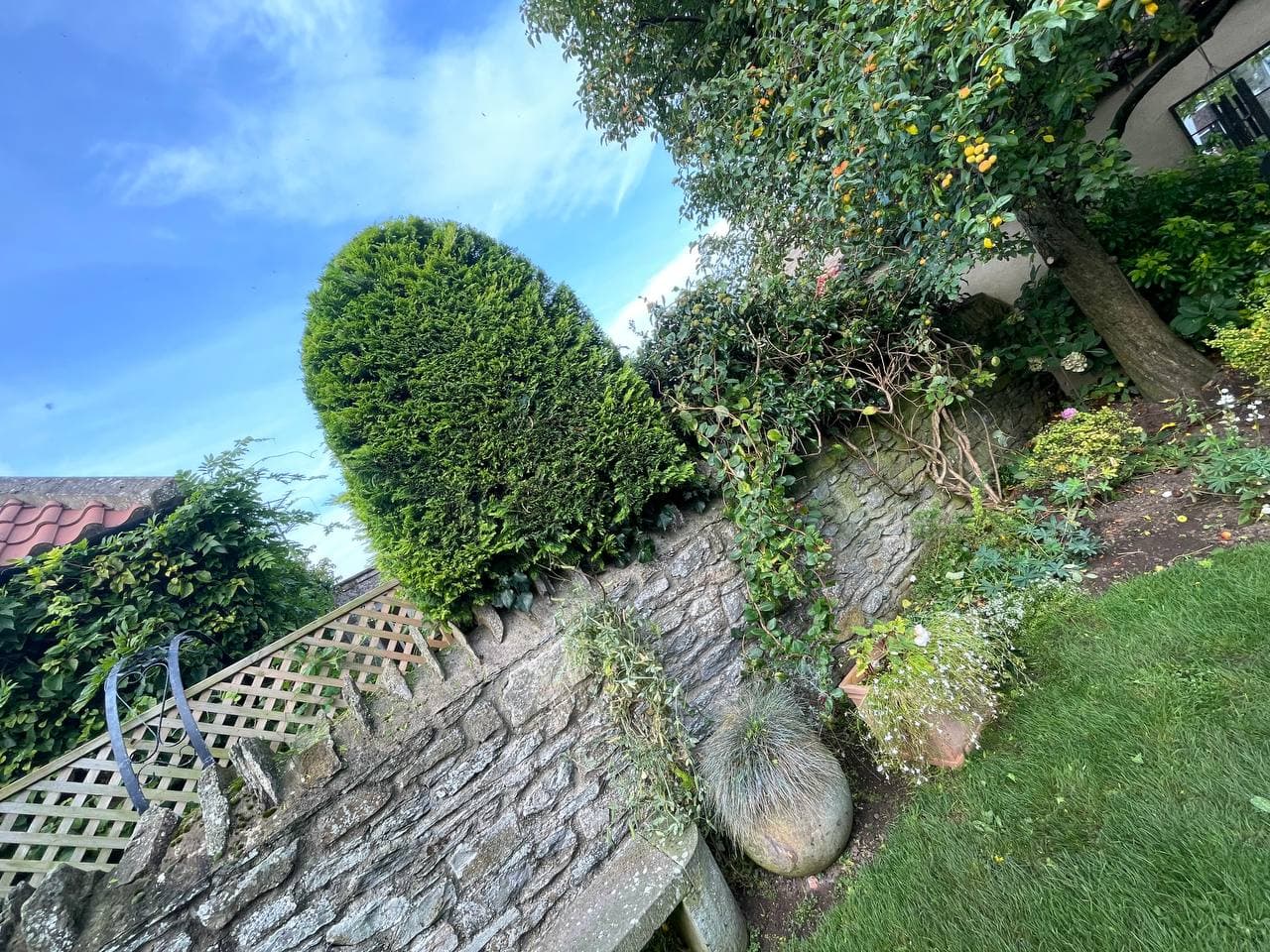
Clipped topiary kept in shape beside a fruit tree and a stone wall

01

Small Domestic Hedge Trimming

Most of our domestic work is straightforward maintenance, keeping a hedge at a sensible height and width, tidying up growth that's got away over summer, and making sure it stays healthy rather than getting hacked back hard every few years out of necessity. Regular trimming keeps a hedge denser and better looking than occasional heavy cutting, since most hedging plants respond to light, frequent trims by thickening up, while harsh, infrequent cuts tend to leave gaps and bare patches.

02

Large Commercial and Boundary Hedge Trimming

Bigger hedges, whether that's a substantial boundary hedge between properties, a screening hedge around a commercial site, or a long run of hedging along a driveway or car park, need the right equipment and enough people to get through the work efficiently and safely, particularly where there's height involved or access is awkward from one side. We quote commercial and boundary work based on the length, height, and access involved, and can set up a regular schedule so it never gets away from you.

03

Shaping

Sometimes a hedge needs more than a light trim, reshaping after years of slightly uneven cutting, correcting a lean, or bringing a hedge back to a clean, formal line after it's been left to grow out. Reshaping takes more care than routine maintenance, since cutting back too hard into old wood on some species can leave bare patches that take a long time to fill in, while others tolerate a harder cut back without issue. We know which is which and shape accordingly.

04

Seasonal Maintenance

Most hedges need at least one, often two, cuts a year to stay looking good and stay healthy, typically a main cut in late summer once the main growing season has slowed, sometimes with an earlier tidy-up cut depending on the species and how quickly it grows. We can set up a seasonal maintenance round so you're not thinking about it, we simply turn up when it needs doing.

05

Hedge Cutting and Nesting Birds

All wild birds, their nests, and their eggs are protected under the Wildlife and Countryside Act 1981, it's an offence to intentionally damage or destroy an active nest. There isn't a blanket legal ban on cutting hedges between specific dates, but the RSPB and most industry bodies strongly recommend treating March to August as the main risk period, since this covers the bulk of the UK nesting season, and checking thoroughly for active nests before any work in that window regardless. In practice, we plan routine hedge work outside this period where we can, and where cutting during it genuinely can't wait, for safety or access reasons, we check carefully first and won't cut into anything that's actively in use.

06

Boundary Hedges and Your Neighbours

If a hedge sits on a shared boundary, you're generally only entitled to cut growth on your own side, and cuttings from your side are usually offered back to the other owner rather than simply discarded, unless otherwise agreed. Separately, tall evergreen or semi-evergreen hedges (generally over two metres) that are blocking a neighbour's light can fall under the High Hedges legislation if a dispute can't be resolved directly, giving the council power to get involved if a formal complaint is made. Most situations never get anywhere near this, a quick conversation with a neighbour before cutting usually heads off any disagreement long before it becomes a formal matter.

Common questions

Frequently Asked Questions

How often should my hedge be cut?

Most garden hedges do well with one or two cuts a year. Faster-growing species like leylandii or privet often need more frequent attention to stay looking sharp, while slower-growing evergreens can often get away with a single annual trim.

Can you cut my hedge if it's overgrown and hasn't been touched in years?

Yes, though very overgrown hedges sometimes need a more gradual approach over a season or two rather than one hard cut back, particularly for species that don't regenerate well from old wood. We'll advise honestly on the best approach when we look at it.

Do you take the cuttings away?

Yes, arisings are cleared and taken away as standard unless you'd prefer to keep them, for example for composting or a bonfire.

Is there a season you won't cut hedges in?

We plan routine work outside the main March to August nesting period where we can, in line with RSPB guidance, though this isn't an absolute legal cut-off, and we'll always check carefully for active nests before cutting at any time of year.

Can you set up a regular maintenance schedule?

Yes, this is common for both domestic and commercial customers, we'll agree a schedule that suits how quickly your hedge grows so it's dealt with before it gets out of hand.

My hedge is a boundary with my neighbour, who's responsible for cutting it?

Generally, each side is responsible for growth on their own side of a shared boundary hedge, though arrangements vary and it's often simplest to agree who covers what directly with your neighbour.

Whether it's a single garden hedge or a full commercial boundary, get in touch and we'll give you a fixed price in writing before anything starts.

+44 7720 577564 · Mon-Sat, 9am-8pm

CallWhatsAppGet a quote